Stop the Waste. Fix South Africa's Water
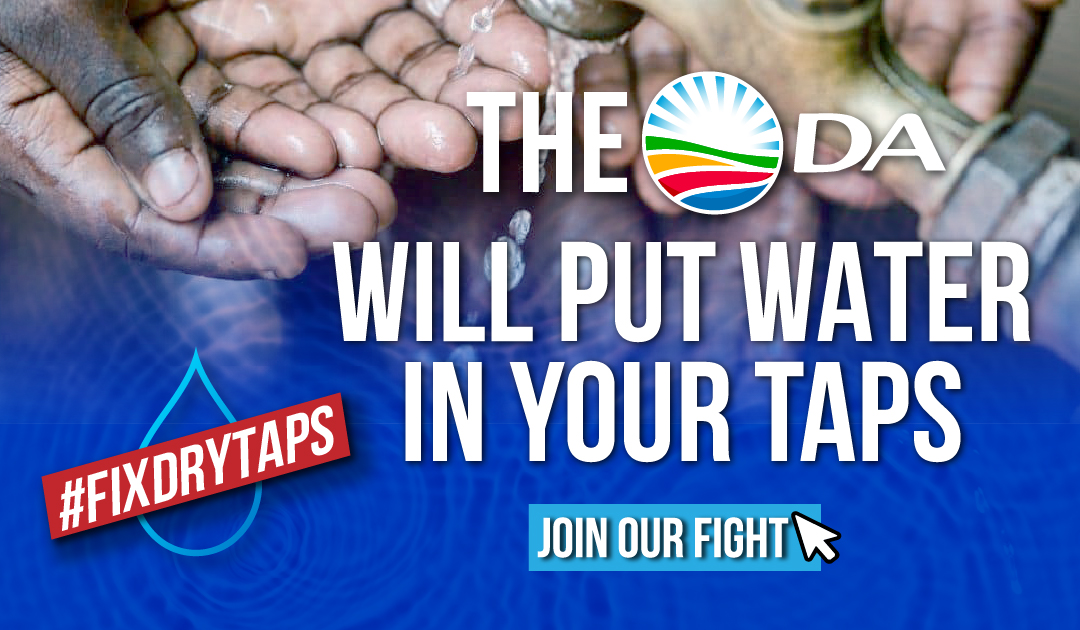
Millions of South Africans turn on their taps and get nothing. Not because the dams are empty. Because the pipes are broken, the money to fix them has been looted, and the politicians responsible have not been held to account.
This is not a problem confined to a handful of cities. Across hundreds of towns and communities in every province, the pattern is the same. Water leaks into the ground through neglected pipes. Infrastructure budgets are raided or returned unspent. Debts to water boards pile up until supply is cut. Residents go days, weeks, sometimes months without water. When they complain, officials say nothing.
In the metros, the failures are on the largest scale. In Johannesburg, nearly half of all water pumped into the city is lost before it reaches taps. That is more than R2.4 billion in lost water every year. The ANC-led coalition has been draining ring-fenced infrastructure funds while spending R263 million on dodgy tanker contracts the courts threw out.
In Tshwane, the DA governed and the water worked. The ANC returned to power and losses jumped by 4.7% immediately. The tanker budget ballooned by 455%. Hammanskraal still has no reliable water.
In eThekwini, losses reach 65% – the highest of any metro in the country. The water that does arrive is often unsafe to drink. The South African Human Rights Commission declared it a human rights violation in 2024. The ANC-EFF coalition responded with excuses.
In Nelson Mandela Bay, 60.5% of water is lost through 4,700 kilometres of broken pipes. While the City’s water network crumbles, only 40 kilometres have been replaced. At that rate, repairs will take over a century. Day Zero fears are back.
In Mangaung, the City loses R488,000 worth of water every single day and spends just 2% of its budget on infrastructure maintenance. National Treasury requires 8%.
In Ekurhuleni, residents have waited more than two weeks for water at a time, caught between a failing bulk supplier and a City that has done nothing to protect them.
But the crisis reaches far beyond the metros. In Ngwathe, a court ordered the municipality dissolved after complete service delivery collapse. In Matjhabeng, R14 billion in debt has left residents without reliable water for months at a time.
In Makana, residents have been buying bottled water for years because what comes out of their taps tested positive for E. coli. In Upington, two pump stations failed at Christmas and residents are still waiting for repairs.
In small towns and rural communities across the Free State, Northern Cape, KwaZulu-Natal, Mpumalanga and the Eastern Cape, the story is the same: broken pipes, empty promises and officials who answer to their party, not the people they serve.
This is not a drought. This is what ANC governance looks like.
Where the DA governs, the water works. Cape Town faced the worst drought in living memory. It did not run dry. That is not luck. That is what competent government delivers.
South Africa does not have a water shortage. It has a governance shortage.
The DA’s plan:
- Ring-fence all water infrastructure revenue so it cannot be raided for other purposes
- Remove cadre appointees and replace them with qualified engineers and water management professionals
- Hold every metro to National Treasury’s minimum 8% infrastructure maintenance requirement
- Pursue SIU investigations into water infrastructure corruption in every metro where public money has been stolen
- Publish water loss figures and water quality results openly for every ward, every month
Sign this petition. Tell the ANC that South Africa’s water is not negotiable.
Then vote DA to put water in your taps.
47655 needed to reach 50000
Millions of South Africans turn on their taps and get nothing. Not because the dams are empty. Because the pipes are broken, the money to fix them has been looted, and the politicians responsible have not been held to account.
This is not a problem confined to a handful of cities. Across hundreds of towns and communities in every province, the pattern is the same. Water leaks into the ground through neglected pipes. Infrastructure budgets are raided or returned unspent. Debts to water boards pile up until supply is cut. Residents go days, weeks, sometimes months without water. When they complain, officials say nothing.
In the metros, the failures are on the largest scale. In Johannesburg, nearly half of all water pumped into the city is lost before it reaches taps. That is more than R2.4 billion in lost water every year. The ANC-led coalition has been draining ring-fenced infrastructure funds while spending R263 million on dodgy tanker contracts the courts threw out.
In Tshwane, the DA governed and the water worked. The ANC returned to power and losses jumped by 4.7% immediately. The tanker budget ballooned by 455%. Hammanskraal still has no reliable water.
In eThekwini, losses reach 65% – the highest of any metro in the country. The water that does arrive is often unsafe to drink. The South African Human Rights Commission declared it a human rights violation in 2024. The ANC-EFF coalition responded with excuses.
In Nelson Mandela Bay, 60.5% of water is lost through 4,700 kilometres of broken pipes. While the City’s water network crumbles, only 40 kilometres have been replaced. At that rate, repairs will take over a century. Day Zero fears are back.
In Mangaung, the City loses R488,000 worth of water every single day and spends just 2% of its budget on infrastructure maintenance. National Treasury requires 8%.
In Ekurhuleni, residents have waited more than two weeks for water at a time, caught between a failing bulk supplier and a City that has done nothing to protect them.
But the crisis reaches far beyond the metros. In Ngwathe, a court ordered the municipality dissolved after complete service delivery collapse. In Matjhabeng, R14 billion in debt has left residents without reliable water for months at a time.
In Makana, residents have been buying bottled water for years because what comes out of their taps tested positive for E. coli. In Upington, two pump stations failed at Christmas and residents are still waiting for repairs.
In small towns and rural communities across the Free State, Northern Cape, KwaZulu-Natal, Mpumalanga and the Eastern Cape, the story is the same: broken pipes, empty promises and officials who answer to their party, not the people they serve.
This is not a drought. This is what ANC governance looks like.
Where the DA governs, the water works. Cape Town faced the worst drought in living memory. It did not run dry. That is not luck. That is what competent government delivers.
South Africa does not have a water shortage. It has a governance shortage.
The DA’s plan:
- Ring-fence all water infrastructure revenue so it cannot be raided for other purposes
- Remove cadre appointees and replace them with qualified engineers and water management professionals
- Hold every metro to National Treasury’s minimum 8% infrastructure maintenance requirement
- Pursue SIU investigations into water infrastructure corruption in every metro where public money has been stolen
- Publish water loss figures and water quality results openly for every ward, every month
Sign this petition. Tell the ANC that South Africa’s water is not negotiable.
Then vote DA to put water in your taps.